How much does a mortgage really cost, and how do we get paid?
The short answer
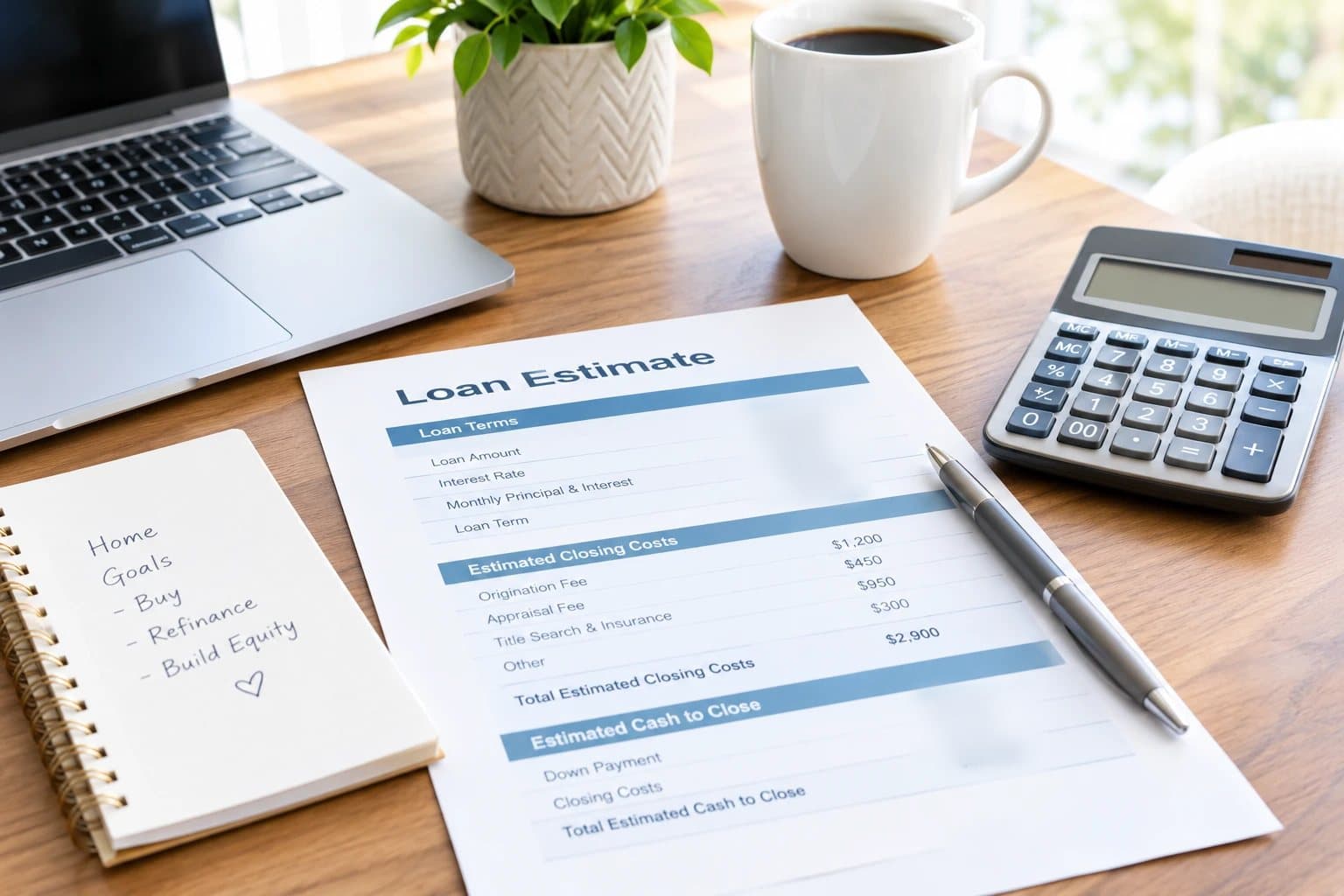
Most borrowers pay closing costs of roughly 2% to 5% of the loan amount, depending on the loan, the state, and the price. The Mortgage Advisory shows every fee, including how we're paid, on your Loan Estimate before you commit, and rates change daily, so call or chat for today's rates.
Last updated
What are today's rates?
Rates change daily, so call or chat with our team for today's rates. We don't post teaser rates. Any rate we quote you comes with the APR and every assumption behind it, in writing.
Want to see what's moving rates? The 10-year Treasury chart below updates every business day.
What will I pay at closing? (Typical ranges)
Every loan is different, so these are typical ranges, not a quote. Your Loan Estimate shows your exact numbers.
| Cost | Typical range | What it is |
|---|---|---|
| Lender fees (origination, underwriting, processing) | Often about $1,000 to $3,000, or a percentage of the loan on some programs | What it costs to make your loan |
| Discount points (optional) | 1 point = 1% of the loan amount | Pay upfront to lower your rate |
| Appraisal | Often about $500 to $900 for a single-family home; more for larger or unique homes | An independent value opinion |
| Credit report | About $50 to $150 | Pulling your credit |
| Title insurance and settlement | Varies with price and state; often the largest third-party cost | Protects the lender (and optionally you) and handles closing |
| Recording fees and taxes | Set by your county and state | Recording the loan; Florida adds doc stamp and intangible taxes |
| Prepaids and escrow | A few months of taxes and insurance, plus interest to month-end | Not a fee: it's your own taxes and insurance, paid ahead |
How does The Mortgage Advisory get paid?
We believe you should know exactly what we make:
- When we're the direct lender (conventional, VA, and Non-QM loans), we're paid through the lender fees and pricing on your loan.
- When we're your mortgage broker (FHA, reverse mortgages, and HELOCs through approved partner lenders), we're paid either by the lender or by you, never both on the same loan. Either way, it's disclosed on your Loan Estimate.
- No hidden fees. If a fee isn't on your Loan Estimate, you shouldn't pay it.
What about FHA, VA, and reverse mortgage fees?
- FHA: 1.75% upfront mortgage insurance (usually added to the loan), plus annual mortgage insurance, about 0.55% of the loan for most borrowers. More on FHA costs.
- VA: a one-time funding fee (2.15% for first use with less than 5% down), waived if you receive VA disability compensation. No monthly mortgage insurance. More on VA costs.
- HECM reverse mortgage: 2% upfront FHA mortgage insurance, 0.5% a year after that, and an origination fee capped by HUD at $6,000. More on reverse mortgage costs.
- HELOCs: some programs charge an origination fee; others build it into the rate. More on HELOC costs.
How do I compare offers?
Get two or three Loan Estimates on the same day, for the same loan, and compare page 2 (closing costs) along with the rate. Here's how to tell if your Loan Estimate is a good deal.
Our take
Cost transparency is how we earn trust. Ask me what I make on your loan, and I'll tell you. Ask me to line our Loan Estimate up next to someone else's, and I'll do that too.
Common questions
How much are closing costs?
Commonly 2% to 5% of the loan amount, including lender fees, appraisal, title, escrow, recording, and prepaid taxes and insurance. They vary by state, loan type, and price, so the only real answer is your own Loan Estimate.
Can the seller pay my closing costs?
Often, yes, within program limits. For example, FHA allows seller contributions of up to 6% of the price, and VA allows the seller to pay closing costs plus up to 4% in concessions. Conventional limits depend on your down payment.
What's a 'no-cost' mortgage?
You take a slightly higher rate, and the lender gives you a credit that covers some or all of your closing costs. It can make sense if you won't keep the loan long. We'll show you both ways side by side.
When will I see your fees?
On your Loan Estimate, within three business days of applying, and we're happy to walk you through a fee worksheet before that.
10-Year Treasury yield
5.28% ▲ 0.04
Close Oct 2, 2026
Daily candles
Weekly candles
Weekly candles
Green means the yield fell (usually good for mortgage rates). Red means it rose.
Source: U.S. Department of the Treasury, daily closing yields, updated each business day. This is market data, not a mortgage rate or an offer to lend.
Have a question about your situation?
Talk it through with our team — no pressure, plain English.